
Zambia
I thought I knew Africa, then I went to Zambia
Your Guide to Africa
Janine Avery
9/8/2026
Discovering Zambia

A country of contrasts
My trip to Zambia was to be a tale of two worlds. One was well known, easy to reach and wonderfully busy. The other: vast, remote and untouched. Somewhere that only rewards those adventurous enough to go looking for it.
That first stop was Livingstone, the gateway to Victoria Falls. Zambia at its most accessible. The Falls themselves the most obvious draw, the Mighty Zambezi a contrast backdrop and plenty to fill your days: game drives, boating, walking, cultural excursions, and more.
And then there was Kafue. It’s vast, and wildly unknown, in a way that’s difficult to comprehend. One of Africa’s oldest and largest national parks. Yet a search on National Geographic’s current website reveals just one article, written sometime before the pandemic. I was headed to its far north-west, an area called Busanga Plains. And if Kafue is uncharted territory, Busanga feels even more so. There are no roads leading in from a nearby town. You fly into an area only open to visitors for about five months of the year. For the rest of the time, this enormous landscape is left to the animals.

But back to the Victoria Falls
Our first glimpse of Zambia came rather late at night. We landed at Livingstone Airport just before sunset, on what felt like an almost comically empty plane from Cape Town, with ours the only aircraft in sight, and set off towards Wilderness Toka Leya. As we drove, the sun was sinking into the horizon as a glorious red orb, and I wondered if one could ever get tired of seeing a proper African sunset.
Then, while enjoying our pre-dinner drinks, we saw the same glowing red orb rising above the river in the east. I did a double take. Except it wasn't the sun. It was the moon. And, as it turned out, we’d rather unexpectedly managed to time our visit over the blood moon. And unbeknownst to us, the Victoria Falls has a rather magical phenomenon known as a lunar rainbow, or moonbow, which occurs when there is a full moon, clear skies and enough spray rising from the Falls to refract the moonlight. Naturally, we had to go and see it.
Our Wilderness guide took us to a quiet spot away from the main viewing areas; standing there in almost complete darkness, with the spray of the Falls settling around us and a pale rainbow suspended above the gorge, felt too improbable to be real. Luck, it turns out, is a necessary travel companion on any safari, and I’m glad he’d decided to come along for ours. During the day, the Victoria Falls is thunderous, spectacular and busy with visitors. At night, under the full moon, it was like Zambia itself: mysterious, almost secretive, and wonderfully magical.

The following morning, we viewed the Falls in the light of day. Visiting in August meant the Zambezi had receded from its high-water levels, so while the Falls were still flowing impressively, the views were clear and magnificent. Having seen a playful troop of baboons at the Falls and some elephants along the roadside, we asked our guide how often they get wildlife in camp. ‘All the time,’ came his reply. There is a spring nearby, and bushbuck, monkeys, baboons and elephants are frequent visitors. ‘It would be lovely to see elephants in camp,’ we said. He said he'd send them an email. Apparently, it was received. Within about ten minutes, an entire herd had arrived.

Our tent was surrounded by them: little ones, enormous ones, and everything in between. Perhaps 20 or 30 of them, quietly making their way along the river. Toka Leya is elevated above the ground, with wooden walkways connecting the tents and main areas, so the elephants could wander around us, completely at ease and unobstructed.
The river itself was another highlight of our time at camp. We embarked on it by boat. Not a languid dinner cruise, but a small, nimble excursion with room for only a handful of people, skimming along the Zambezi and weaving between the channels and rapids. There were countless kingfishers, fish eagles, marabou storks nesting high in enormous baobabs, and even an African finfoot spotted by our guide. Along the banks, we watched baboons, kudu and impala, while crocodiles lay motionless at the water's edge. And, of course, there were hippos. Lots of them.

On to the Busanga Plains
From Livingstone, we flew to Kafue National Park in a small eight-seater plane, landing in the Busanga Plains after about an hour and a half. Great expanses of golden grass stretched to the horizon, broken only by little islands of palms, figs and jackalberry trees. During Zambia's summer rains, these grasslands flood, meaning trees can only grow where there is slightly higher ground, leaving behind these islands in a great seasonal floodplain. The now dry plains give way to woodland, and areas scattered with tiny termite mounds; little tombstone-shaped heads forming eerie graveyards, dotted with oribi, ‘the largest of the small antelope’, as our guide described.
The landscape encourages you to look. Search. Scan. And again. There is so little to interrupt your view that you can spend minutes staring at the horizon, looking, and hoping for the flick of the tail or a twitch of the ear of a cat amongst the grass.
And that’s exactly what we did over the next four days, visiting both Wilderness Shumba and Busanga Bush Camp. Shumba is raised like Toka Leya, with an elegant, contemporary feel punctuated by accents of copper, glass, and sweeping views of plains of puku and lechwe against the rising sun. Busanga Bush Camp, by contrast, is more rustic, reminiscent of an original explorer camp, with just four tents set directly on the ground. Here I awoke one morning to step over some lion footprints on the way to the game drive vehicle, meaning someone had paid us a visit in the middle of the night.

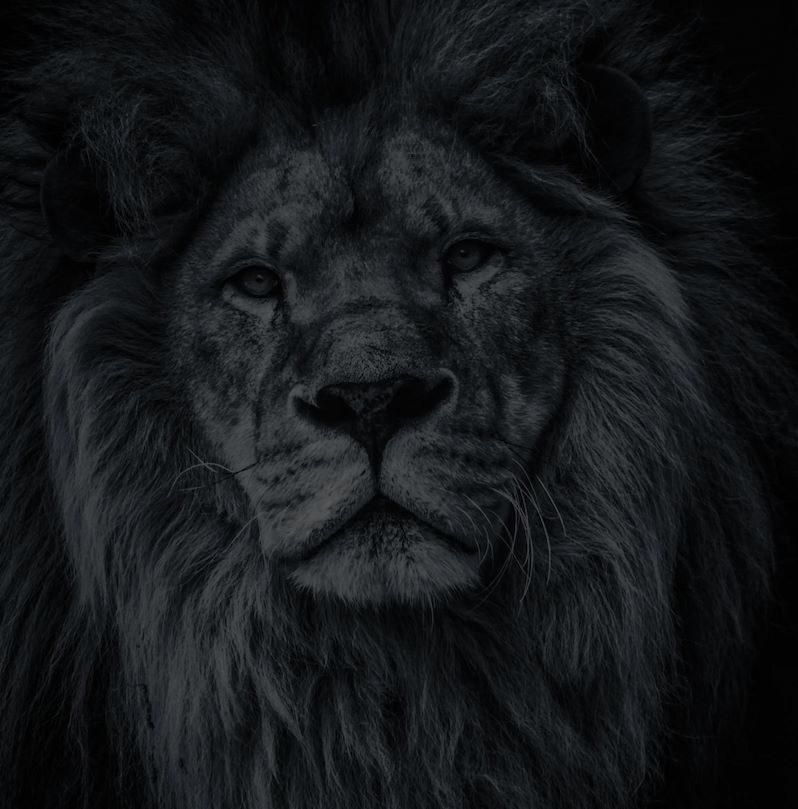
And my time in Kafue was all about those lions. Seeing them was a daily occurrence, sometimes several times a day. Over three days we followed two different prides across the plains, and among them were lots of little cubs; noisy, adorable and endlessly entertaining. There is something particularly special about watching lion cubs in an environment like this. The plains are so open that you can often see a pride coming from far away, and with so few vehicles around, we could sit with them rather than feel compelled to move on because another vehicle was waiting for the same sighting. For a photographer, that is a dream.

Lions were the stars of the show, but they certainly weren’t the only impressive sights we enjoyed in Busanga. We once found ourselves alone with a herd of 50 sable in the woodland, whilst on the same drive we encountered roan, eland and Lichtenstein's hartebeest. Busanga is renowned for its remarkable diversity and density of antelope, and our guides seemed almost as excited at our antelope sightings as we were. Another drive we found three cheetahs on a kill. We followed a pair of jackals as they trotted opportunistically between the puku. And we spent countless hours watching hippos gathered in and around the channels.

And then there were the smaller, more elusive creatures that only reveal themselves once the sun has gone down. Because a game drive here doesn't have to end when it gets dark, we were able to keep driving after our sundowners, encountering porcupines and genets, as well as serval – including two of these elusive, long-legged cats on one drive.
And then one morning, we left the vehicle behind and went walking. Our guide was understandably cautious about where we went. This is a landscape where lions are a regular presence, after all. But recent controlled burning had created an area with particularly good visibility, and accompanied by an armed scout, and with enormous views across the plains, we felt secure and comfortable on foot.
Little butterflies flitted through the grasses, named cleverly after the pansy flowers they resembled. We came close to lechwe and puku that examined us curiously, warthogs scurried off at the sound of our scrunching footsteps while elegant grey crowned cranes didn’t let the presence of some mere humans ruffle their feathers, or their namesake crowns. We identified tracks in the hardened black-cotton soil, spoke at length about animal dens, and touched, and even tasted, dung and droppings. And then, in the middle of all this, we were incredibly lucky to see a bush pig in broad daylight. These notoriously shy, largely nocturnal animals are rarely encountered during the day, making it a particularly memorable sighting.
Back at camp, there was wildlife everywhere. Lechwe and puku moved across the grass in the distance, while more grey crowned as well as wattled cranes, and yellow-billed storks added splashes of colour, and African fish eagles seemed to be calling from every direction.

Africa’s best kept safari secret

More to discover

Ingrid Wood
05.10.2026

Wilderness Etosha and the Skeleton Coast land bridge
Discover Wilderness Etosha, where elephants, wildlife corridors and conservation research reveal a l...
Read moreIngrid Wood
30.09.2026

Rebuilding Serra Cafema: What it takes to bring a camp back to life
Fire changed Serra Cafema, but not its spirit. Discover how this remote Namibian icon is being thoug...
Read moreIngrid Wood
29.09.2026

Inside the Linyanti’s changing lion prides
Discover the remarkable story of the DumaTau Pride, now 32 lions strong, and how ongoing monitoring ...
Read moreMpho Williart, Wilderness Environmental Impact Officer
29.09.2026

The Masai Mara after the migration: A safari without the crowds
Experience the Mara beyond the Great Migration, when fewer vehicles, resident predators, migratory b...
Read moreHein Prinsloo, CEO of Wilderness Kenya
28.09.2026
Let’s plan your next journey
Ready?
When we say we’re there every step of the way, we mean it, literally. From planning the perfect circuit, to private inter-camp transfers on Wilderness Air, and easing you through Customs. We’re with you on the ground, at your side, 24-7, from start to finish. Ready to take the road less travelled? Contact our Travel Designers to plan an unforgettable journey.